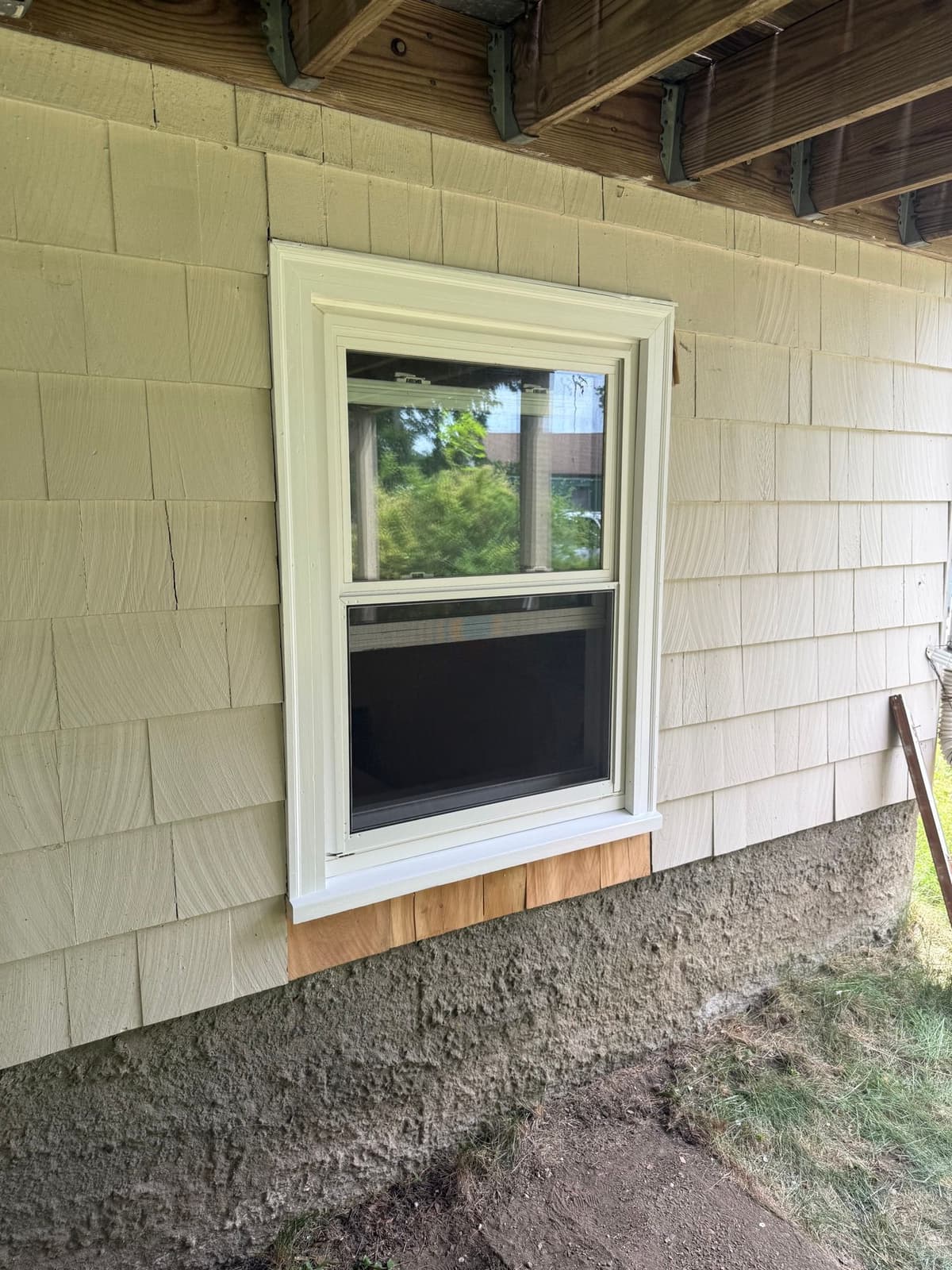
The Problem
The window unit itself was only about two years old, a replacement that had been dropped into the existing opening. The problem was that the original sill and trim, likely dating back to when the house was built in the 1960s, were left in place. Whoever swapped the window just popped the new unit in and never touched the surrounding woodwork, so water kept finding its way into that old wood. The sill and the side trim had gone soft and rotted. We caught it at the right time though: the rot had only progressed into some of the cedar shingles below the window and a bit into the frame, which we carved out. Done right, a job like this calls for a new-construction window with all new sill and trim. Left alone, that kind of rot only travels further into the wall.
A Closer Look
Up close you can see how far it had gone. The side trim board was split open and hollow with rot, not something you can fill or paint over. To fix it properly we needed to get behind it.
Pulling the Window
The window was only a couple of years old and in good shape, so there was no sense replacing it. We carefully removed it and took off the old trim so we could rebuild everything from solid wood, then set the same window back in at the end.
A Custom Sill
We built a new sill from scratch. It looks simple in a photo, but it takes a lot of angle cuts to get the slope and the fit right so water sheds away from the house instead of pooling on the wood.
Matching the Old Trim
The original window trim dates to the 1960s, so off-the-shelf trim would not match. We built the trim out using common 908 trim and 2x1 inch pre-primed white pine to rebuild the same profile. Like the sill, it took a lot of angle cuts to get the trim to line up cleanly. We then replaced the rotted cedar shingles below and reinstalled the window. It came out cleaner than the trim on the home's other windows, which are showing their own age and wear.