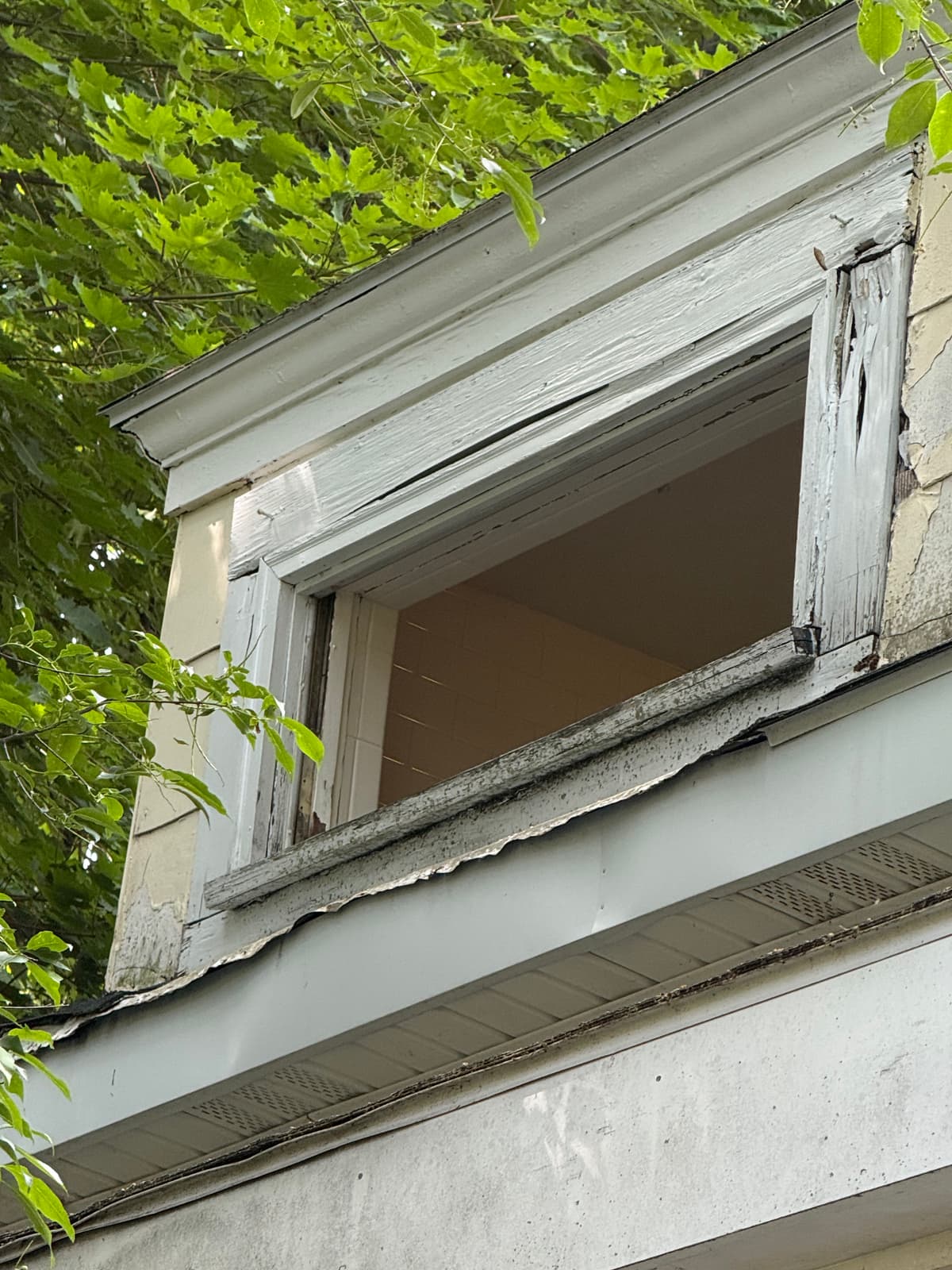
A Rental Inspection That Could Not Wait
The owner was getting this property ready for new tenants, and the rental inspector flagged the bathroom awning window. The owner's maintenance person had already started taking the old window out when the real problem showed itself: extensive rot around the opening. By the time we got the call there was a hole in the wall where the window used to be, the tenants were due to move in, and the inspector could not sign off until the opening was dealt with properly.
Why We Could Not Just Drop a Window In
The owner was hoping we could install a new window right away, the thinking being no window, no tenants. There were two reasons that could not happen. First, code: a bathroom window needs tempered safety glass, which is a custom order with a lead time of about four weeks. Second, this is not a job for a replacement insert window. Since the rotted frame has to be rebuilt, the right unit is a new construction window, the kind that ties into the framing rather than dropping into an existing frame. There was no honest way to have that window in before move-in, so we laid out the plan: a safe temporary fix now, and the real installation later.
A Safe Temporary Fix
To close the opening we framed it out with 2x1 and fit a plexiglass panel, sealing the wall against weather and keeping the bathroom secure. It lets light in and keeps water out until the new construction window is ready to go in. With that temporary fix in place and a signed contract laying out the full installation, the inspector was able to sign off so the new tenants could move in on schedule.
What We Are Dealing With
The rot is not cosmetic. It runs throughout the window frame, with both bottom corners gone soft, the kind of damage that spreads quietly behind trim and shingles for years before anyone sees it from the outside. There is no telling how far it goes until we start opening things up. These closeups show how far it had already traveled by the time the window came out.
The Plan
We start demo soon to find out how far the rot runs. The trim comes off first. If the wood behind it is solid, we are in good shape. If not, we keep going: the wood shingles come off next so we can reach the frame. One thing we will not rush past is the shingles themselves. On a home this age they could contain asbestos, so if there is any doubt we test them and bring in a licensed specialist to handle removal rather than guessing. Once the frame is open we will know exactly what we are rebuilding. The new construction window goes in once two things line up: the custom tempered unit arrives, and demo has gone back far enough to reach solid wood we can frame and build against. We are not putting a date on it, we are putting it in right.
How Bad Rot Can Get
We are hoping the damage stops at the trim, shingles, and frame. But it is worth being honest about the worst case, because it is exactly why rot should never be left to sit. If the water got far enough into the wall, fixing it right could mean going in from the bathroom side: pulling tile, possibly removing the tub, repairing the structure behind it, and then putting the whole bathroom back together. A small flagged window can turn into a much larger job when rot is ignored long enough. That is the lesson here even if we get lucky on this one. Caught early, this is trim and shingles. Caught late, it is a bathroom.
We Will Update This As It Goes
This is a live job, so this write-up is a work in progress. We will add photos and details as the demo tells us what is really behind that wall, through to the day the new tempered window goes in.